

Key takeaways
- A strong website partner should understand your commercial goals, not just your visual preferences.
- Compare providers on strategy, content, usability, SEO, support and the exact type of website you need.
- Know the difference between web design and web development so you can brief the right skills.
- Ask about CMS choice, maintenance and launch support before you request a quote.
- If you need wider digital help, a partner that also offers marketing or automation can reduce handovers.
If you are choosing a website design company, the right fit is usually the team that understands your business goals, not just the one with the best-looking portfolio. For UK businesses, the important question is whether the company can help you generate enquiries, support customer journeys and build a site that can grow with your needs.
This guide shows you how to compare providers properly: what to look for, which questions to ask, how website design differs from web development, and when a redesign, bespoke build, eCommerce site or landing page makes the most sense. It also explains where Circlemount’s verified website services may be relevant if you need a new site or a broader digital partner.
What to look for in a website design company
The best way to assess a provider is to focus on how they think, not just how their work looks. A good website partner should ask about your audience, offers, conversions, service areas and the practical job the site needs to do.
That usually means they should be able to explain their process clearly, show experience with your type of project and talk about the parts that sit behind the visuals: content structure, technical build, search visibility and post-launch support. If those topics never come up, the proposal may be too shallow for a business website.
For Circlemount, the verified website offer includes bespoke business websites, eCommerce and Shopify websites, redesigns, landing pages and custom web applications. You can review the core offer on the website services page and the broader services overview.
Compare website providers on the criteria that matter
A side-by-side comparison is more useful than judging agencies by price alone. Use the criteria below to compare a website design company on delivery quality and long-term fit.
| Criteria | What to look for | Why it matters |
|---|---|---|
| Discovery and strategy | Questions about goals, audience, offers and conversion paths | Helps ensure the site is built for business outcomes, not just aesthetics |
| Website type fit | Relevant experience with bespoke sites, redesigns, eCommerce, landing pages or web apps | Different website types need different planning and technical decisions |
| Content and SEO support | Guidance on page structure, messaging and search-friendly setup | Prevents a polished site from becoming hard to find or hard to understand |
| Mobile and usability thinking | Clear attention to responsive layouts and easy navigation | Your users will judge the site on how it works on smaller screens as well as desktop |
| Support after launch | Maintenance, updates or an agreed route for future changes | A website needs ongoing care once it goes live |
This is where a lot of comparisons become clearer. If one supplier talks only about visuals and another talks about structure, content, mobile experience and support, the second conversation is usually more commercially useful.
Website design vs web development
One of the most common points of confusion is the difference between website design and web development. The terms are often used together, but they are not the same thing.
Website design focuses on the planning and presentation of the site: layout, messaging, navigation, hierarchy and the overall user journey. Web development is the build side: turning the approved design into a working site, often including templates, functionality, integrations and technical implementation.
In practice, many projects need both. If you are comparing providers, ask whether design and development are handled together or by separate specialists, and how decisions move from concept to build. That helps you avoid gaps between the creative brief and the finished site.
Choose the right website type for your brief
Not every business needs the same solution. A good provider should help you choose the right format rather than forcing a one-size-fits-all approach.
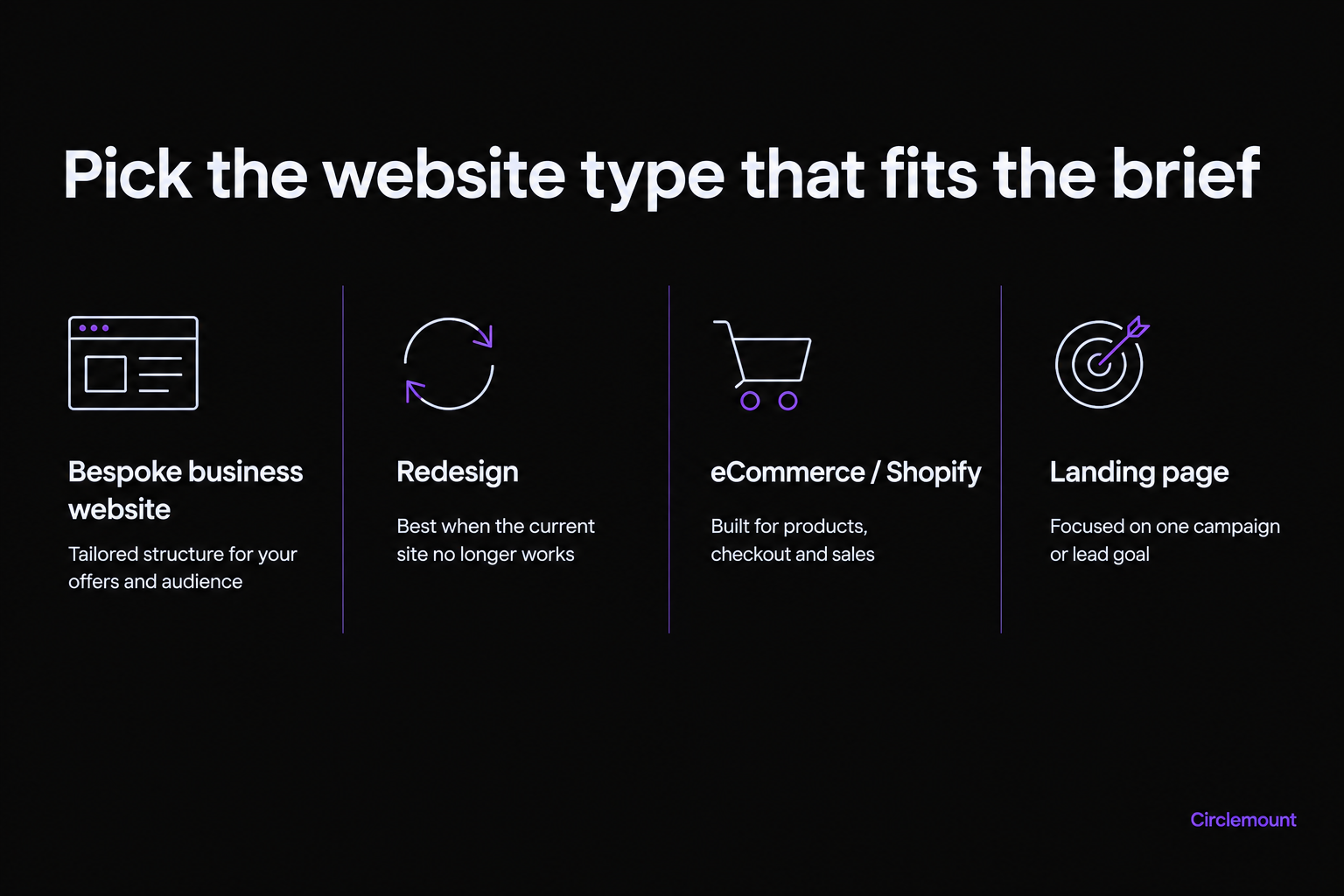
Match the website format to the business task before comparing agencies.
| Website option | Best for | Typical decision point |
|---|---|---|
| Bespoke business website | Businesses that need a tailored structure and journey | You want the site shaped around your offers and audience |
| Redesign | Sites that are outdated or no longer effective | You already have a site, but it is not doing its job properly |
| eCommerce / Shopify | Businesses selling products online | You need product browsing, checkout and commercial clarity |
| Landing page | Campaigns, promotions or focused lead generation | You need one page built around a specific objective |
| Custom web application | More complex operational or user workflows | You need functionality beyond a standard marketing site |
If a company cannot explain which option fits your brief, that is a useful warning sign. The right supplier should be able to turn uncertainty into a clear recommendation.
CMS, WordPress and ongoing support
For many UK businesses, the content management system matters because it affects how easily the site can be updated after launch. A website design company should be able to explain what CMS they recommend, why it suits your team and how much day-to-day control you will have.
WordPress is a common option for business websites, but the right choice depends on the project. What matters more than the platform name is whether your team can update pages, publish content and maintain the site without unnecessary friction. Ongoing support and maintenance also matter, because a website needs updates, fixes and occasional improvements after launch.
If you are speaking to Circlemount about a website project, the wider service structure may also help if you need later marketing or automation support. Start with the website services page, then review the broader services page for context.
How to assess mobile-first and responsive design
Responsive design is not a bonus feature; it is a basic requirement. Your website should work well across desktop, tablet and mobile screen sizes, with readable text, usable navigation and clear calls to action.
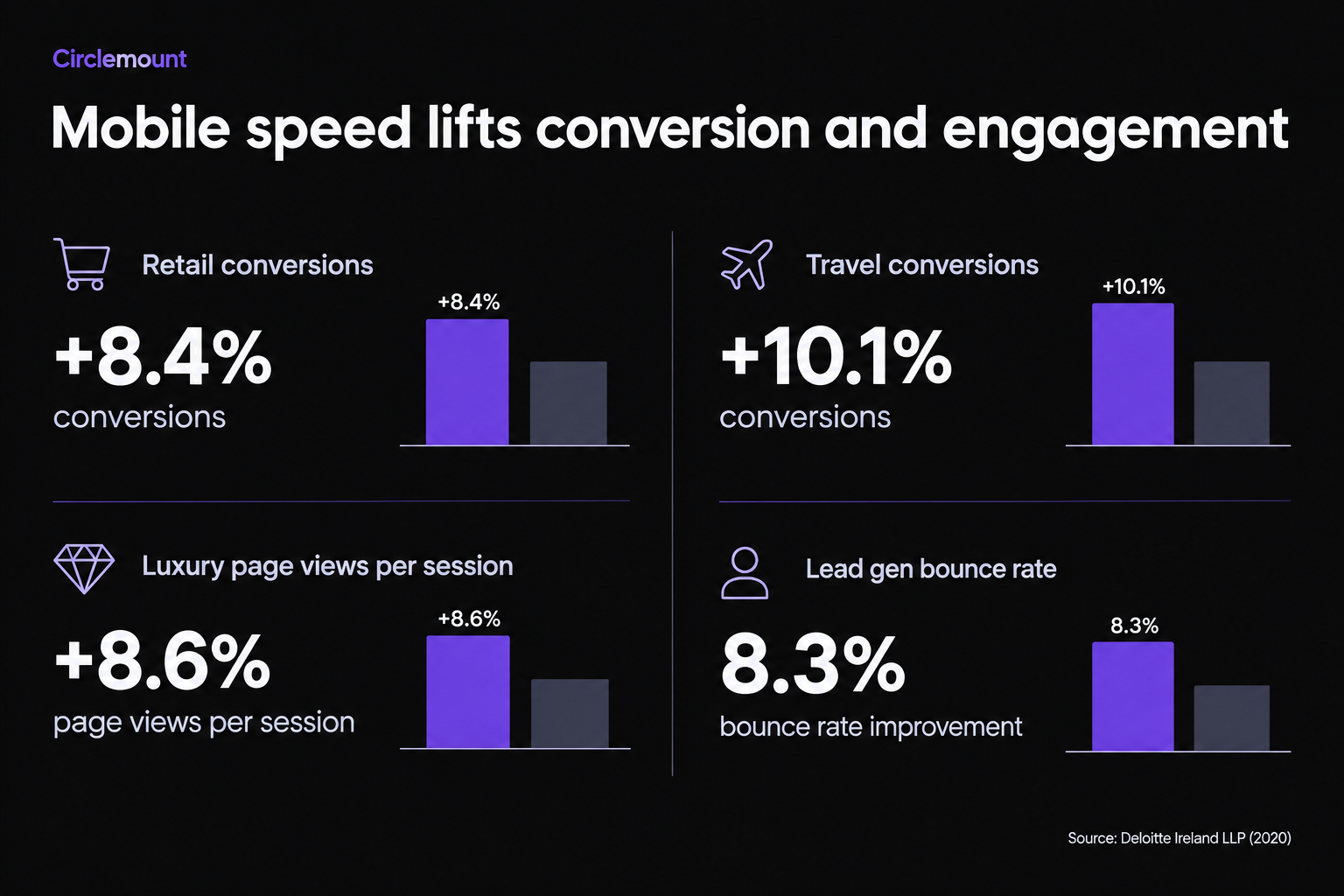
Deloitte's 2020 study observed these changes alongside a 0.1-second natural mobile-site speed improvement across participating European and US brands. Historical associations, not guaranteed results for your website.
Deloitte Ireland LLP · 2020
When you review a proposal or portfolio, check whether the company talks about mobile behaviour as part of the design process rather than as a final test. A strong website design company will think about spacing, tap targets, content priority and page structure across screen sizes from the start.
This matters even more for lead generation websites, because users often make quick decisions on mobile. If the journey becomes awkward on a small screen, the site can lose credibility before it has a chance to convert.
Questions to ask before you request a proposal
Before you ask for a quote, it helps to test how a company thinks. The questions below are practical, and they quickly reveal whether the provider understands the wider business task.
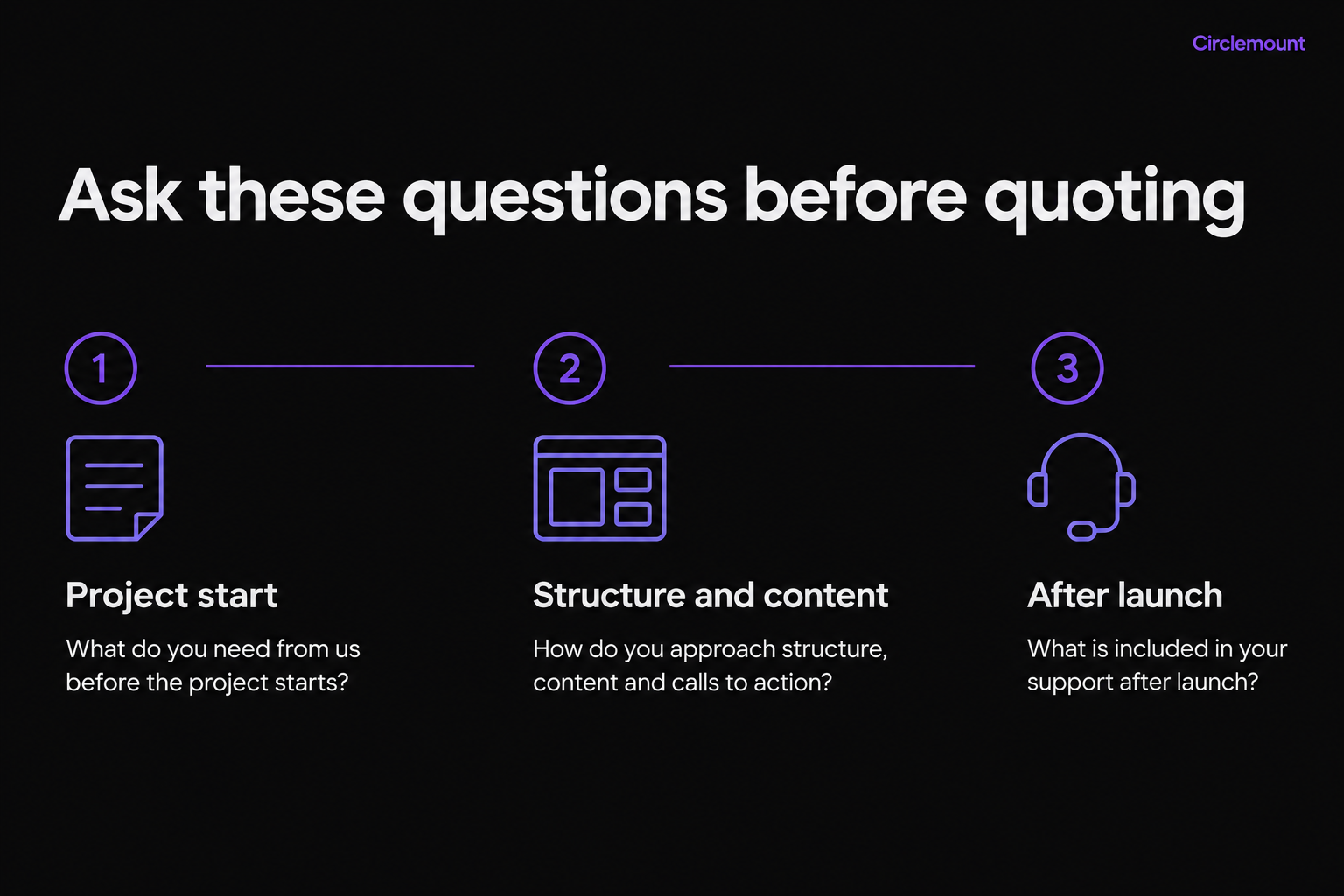
A short checklist reveals whether a supplier understands the full business brief.
- What do you need from us before the project starts?
- How do you approach structure, content and calls to action?
- How do you decide between a redesign and a rebuild?
- Which CMS do you recommend, and why?
- What is included in your support after launch?
- How do you handle SEO or other digital marketing needs if they are part of the brief?
These questions help you compare providers on process rather than polish. They also make it easier to see whether a company can support the next stage of your digital work.
How to judge fit for UK businesses
For UK buyers, location is not the only factor, but it can still matter. A local or regional partner may understand your market, your language and the commercial context in which you operate.
Circlemount is based in Telford and positions its services for UK businesses, with emphasis on Shropshire and the West Midlands. That may be relevant if you want a partner that combines website work with wider digital services, including marketing and practical AI/business automation.
That said, local fit should never replace commercial fit. The better question is whether the company can understand your brief, explain its approach and support the outcome you want. If you need a broader digital partner, you can also review the AI automation service and the solutions page for sector context.
What to watch out for when choosing a website design company
Some warning signs are easy to miss early on. None of them automatically rule a provider out, but they are worth challenging.
- The conversation stays focused on colour, layout and style, not outcomes.
- The company cannot explain the difference between design and development.
- The proposal is generic and does not reflect your business model.
- There is little mention of mobile use, content structure or search visibility.
- Support after launch is vague or missing entirely.
If the discussion never moves beyond “we’ll make it look modern”, you may not be getting the strategic thinking your business needs.
How Circlemount’s website services may fit this decision
Circlemount’s verified website offering includes bespoke business websites, eCommerce and Shopify builds, redesigns, landing pages and custom web applications. That makes the service relevant if you are comparing a partner for a single website project or for a wider digital roadmap.
If your brief includes lead generation, customer journeys, marketing support or future automation, the wider Circlemount service structure may be worth reviewing alongside the website offer. Start with the website services page, then review the broader services page before requesting a proposal.
When you are ready to move forward, prepare a short brief that explains your goals, current problems, audience and must-have features. Then use the contact page or request a proposal route to start the conversation.
Frequently asked questions
What does a website design company do?
A website design company plans and builds websites for businesses. Depending on the supplier, that can include strategy, content structure, design, development, mobile responsiveness, search-friendly setup and post-launch support.
How do I choose the best website design company in the UK?
Choose the company that best understands your goals, has experience with the website type you need, explains its process clearly and can support the project beyond launch. Local knowledge can help, but fit and capability matter more.
Should I choose a company that also offers SEO and marketing?
If your website needs to generate leads, support campaigns or improve search visibility, a company that also offers SEO or marketing can be useful. It is not essential for every project, but it can reduce handovers and keep the strategy joined up.
What is the difference between a redesign and a new website?
A redesign improves an existing site, while a new website is built from the ground up. A good agency should help you decide which option is more suitable based on your current site, content and goals.
Do I need a bespoke website or a template?
Use a bespoke site if your business needs a tailored structure, custom journey or more complex requirements. A template can be enough for simpler projects, but it may be less flexible as your needs grow.
How long does a website project usually take?
Project length depends on scope, content readiness, approvals and functionality, so there is no single answer. Ask the company to explain its process and what could affect timing before you commit to a schedule.
For practical guidance on scope and service fit, review the website services page and compare it with the broader services overview before requesting a proposal.
External references used for general guidance: Google Search Central’s SEO Starter Guide, W3C’s Introduction to Web Accessibility, and GOV.UK Service Manual.
About the author
Marcus Raiyat
Verified author | Founder & CEO | Website strategy and digital growth
Marcus Raiyat is the Founder and CEO of Circlemount. He founded Circlemount in 2022 after building and scaling a SaaS investing-research platform to more than 39,000 subscribers. He brings a business-owner's perspective to website strategy and digital growth, focusing on commercial goals and measurable outcomes.
AI-assisted editorial content. Author identity and biography verified by client-authorised staff.